
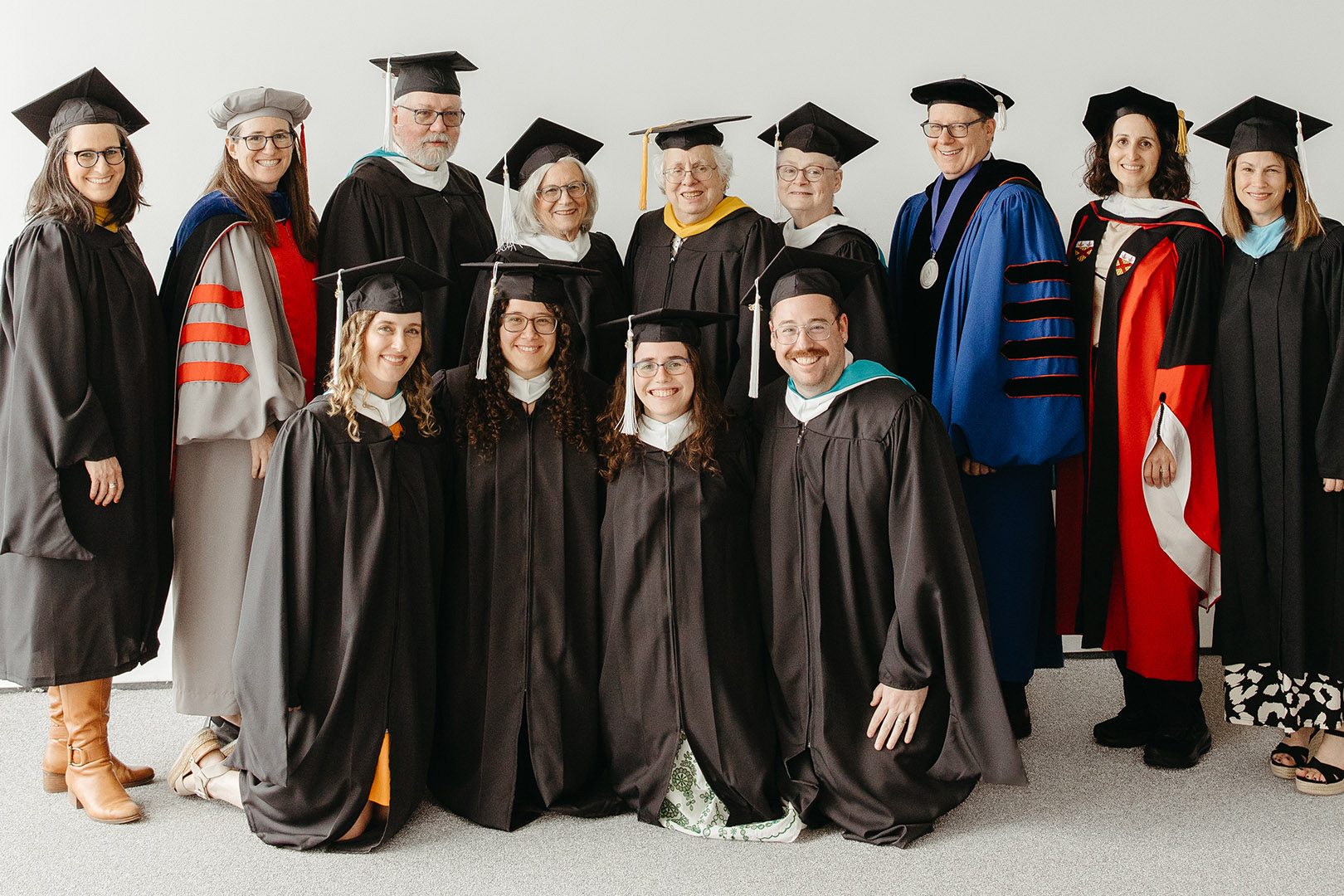
Spertus Institute announces the 2026 graduates of its prestigious master’s programs.
Judaism teaches us to pursue knowledge throughout our lives. Learning strengthens our understanding of ourselves, expands our perspective, and equips us to face contemporary challenges.
The fifteen 2026 Spertus Institute graduates embody this vital Jewish tradition. They join thousands of Spertus alumni who advance Jewish organizations and communities around the world with knowledge and skills gained at Spertus.
Degree of Master of Arts in Jewish Professional Studies
Eight graduates received their Master of Arts in Jewish Professional Studies, a cohort-driven program that provides values-based professional and leadership development to those serving Jewish organizations across North America.
- Hannah Elbaum, Assistant Director of B. Mitzvah & Hebrew Learning, Temple Beth Shalom, Framingham, MA
- Leigh Evans, Sisterhood Board of Directors, Temple Beth Am, Jupiter, FL
- Barak Malkin, Leadership Development Manager, Congregational Services & Community Vibrancy, Union for Reform Judaism, West Orange, NJ
- Ellie Rips, Assistant Director, Hillel UW, Seattle, WA
- Josh Schalk, Executive Director, Jewish Future Promise, Lakewood, OH
- Aliza Silverman, Executive Director, UMBC Hillel, Baltimore, MD
- Marina Slabodnik, Settlement Worker, JIAS Toronto, Maple, ON, Canada
- Mara Swift, Online Engagement and Fundraising Manager, 70 Faces Media, New York City, NY
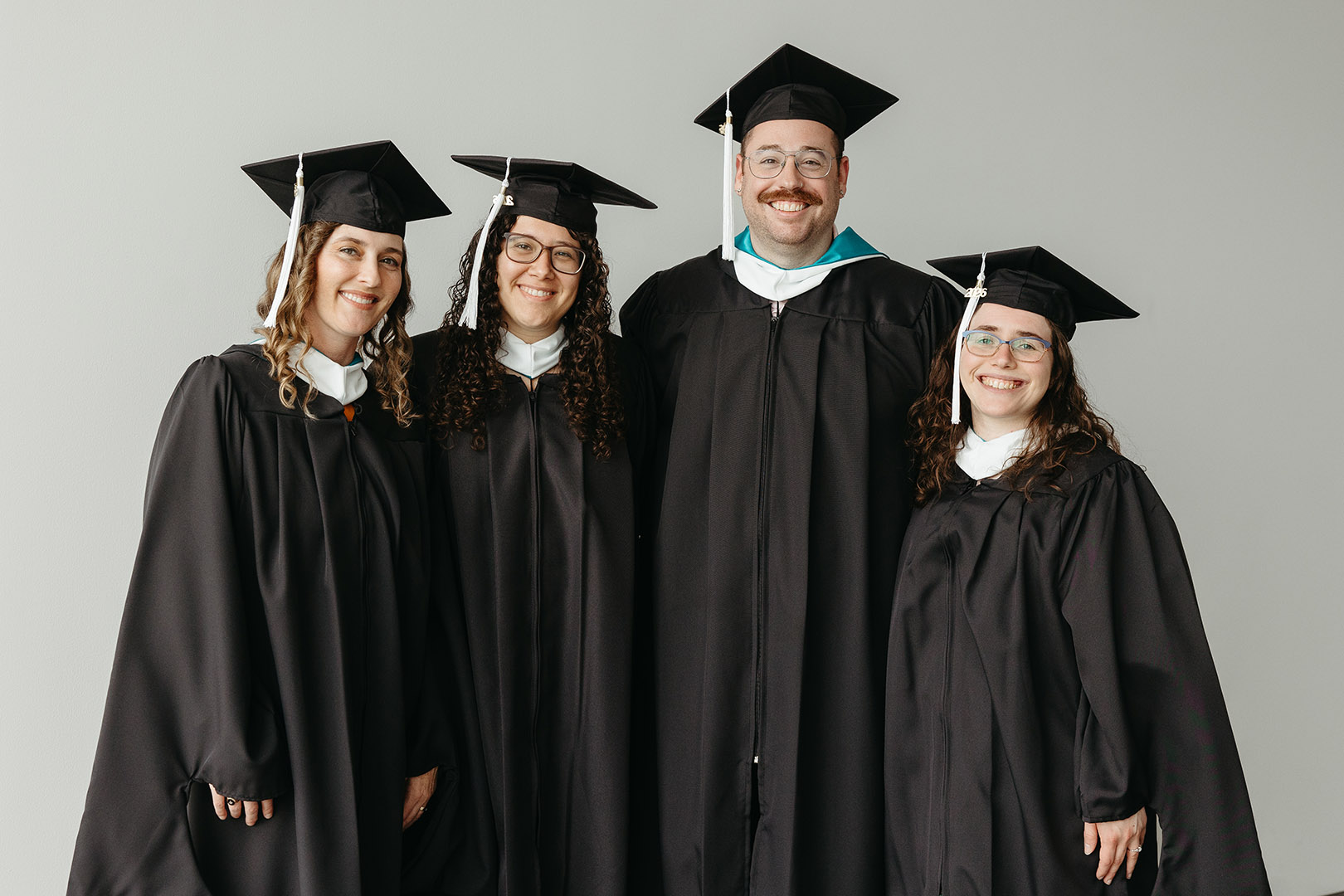

From left to right: Leigh Evans, Ellie Rips, Josh Schalk, and Aliza Silverman.
Degree of Master of Arts in Jewish Studies
Six graduates received their Master of Arts in Jewish Studies, carrying on Spertus Institute’s decades-long role as a pioneer in the field, plus one student received a degree of Master of Science in Jewish Studies.
- Allison Blakley, Northbrook, IL
- Howard Fuller, Bellingham, WA
- Mark Levine, Houston, TX
- Ellen Olshansky, Pittsburgh, PA
- Aviva Sussman
- Steve Young, Woodstock, IL
Degree of Master of Science in Jewish Studies
- Reva Freedman, DeKalb, IL
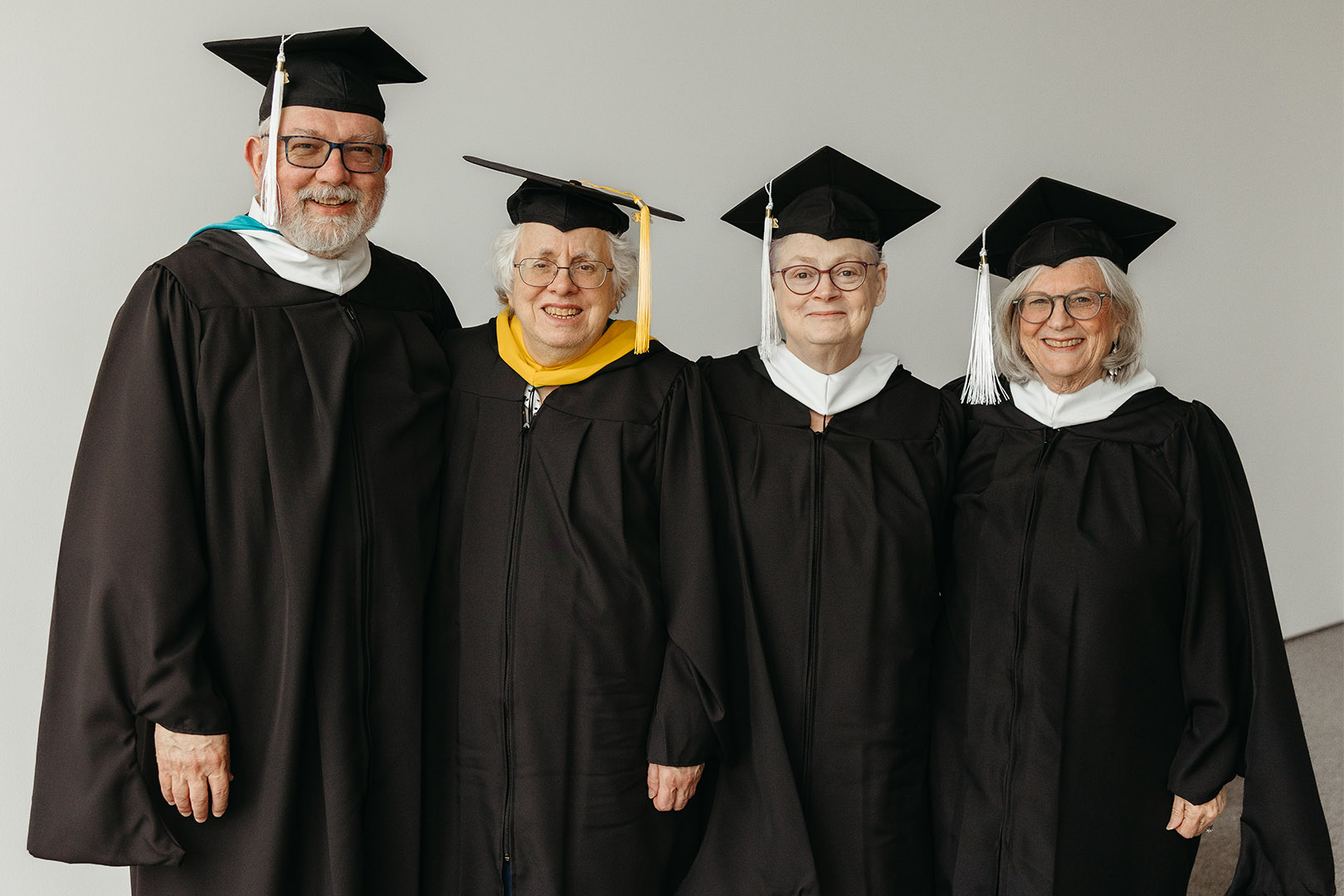
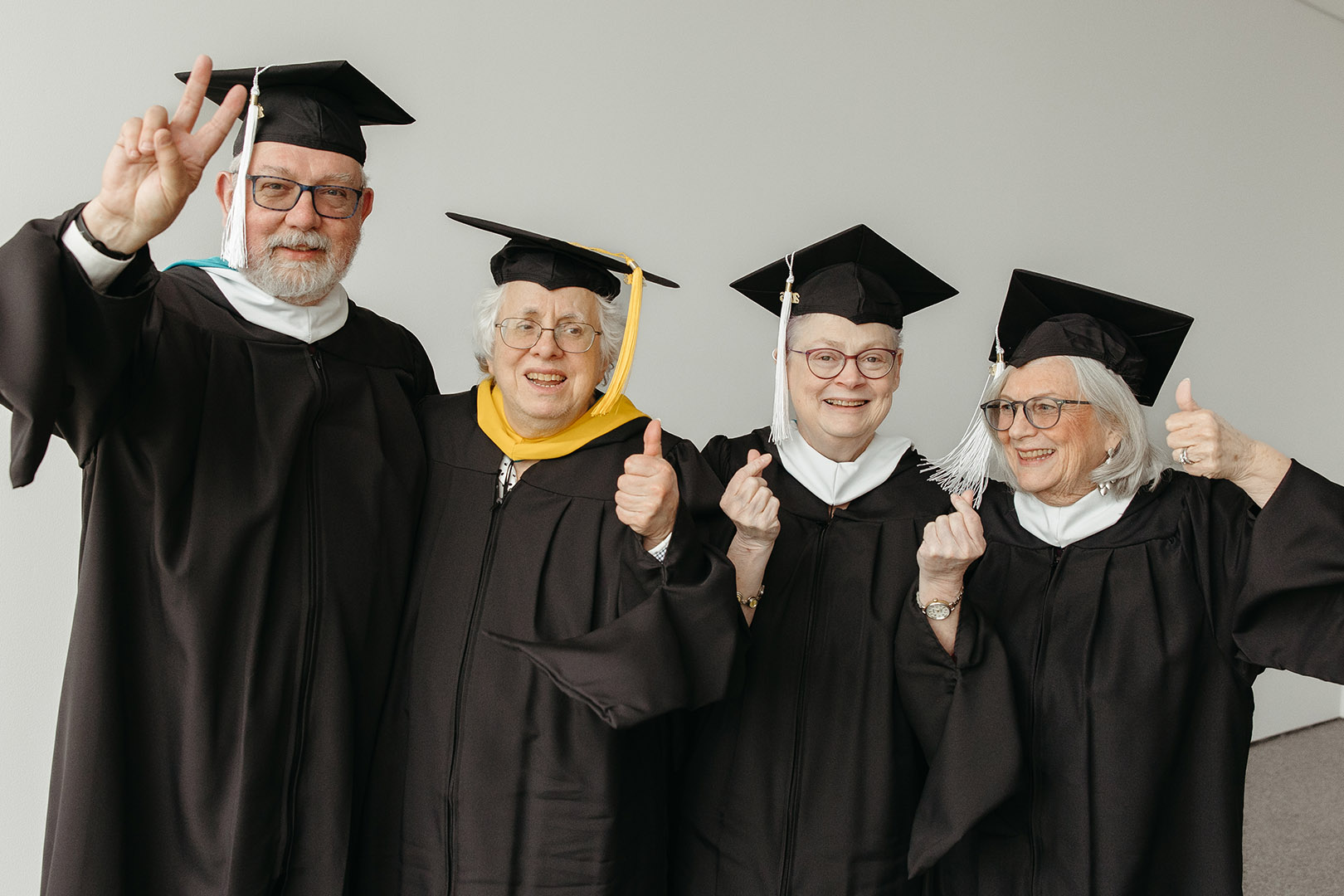
From left to right: Steve Young, Reva Freedman, Allison Blakley, and Ellen Olshansky.
The 2026 graduation ceremony was held on Sunday, May 3, at Spertus Institute’s award-winning downtown Chicago campus. In his welcome to graduates and guests, Spertus President & CEO Dr. Dean P. Bell said: “We are here today to recognize and celebrate their past (and present) accomplishments, present work, and the future that will be shaped and improved by them. The future is open and ready to be informed.”
Spertus Vice President & Chief Academic Officer Dr. Keren E. Fraiman then highlighted the virtues of the 2026 graduates, saying, “Spertus is guided by two core truths: that learning communities are vibrant communities and that great communities need great leaders. Our graduate students exemplify these values and are our most precious institutional asset.”
“Our students are not content to live in the past—they continuously and tirelessly seek to learn, grow, and develop. They embrace and exemplify lifelong learning, one of Spertus’ core institutional values.” – Dr. Keren E. Fraiman
She then commented, “As communal leaders, you have held others and strengthened those around you. This has been such a challenging time, and yet alongside all that was happening around you, you were there for one another, engaged in deep thinking with your faculty, and showed up fully, as your whole selves. For me, each of you has been a ray of light in challenging times. A glimmer of hope that we will endure and be stronger, guided by each of you.”
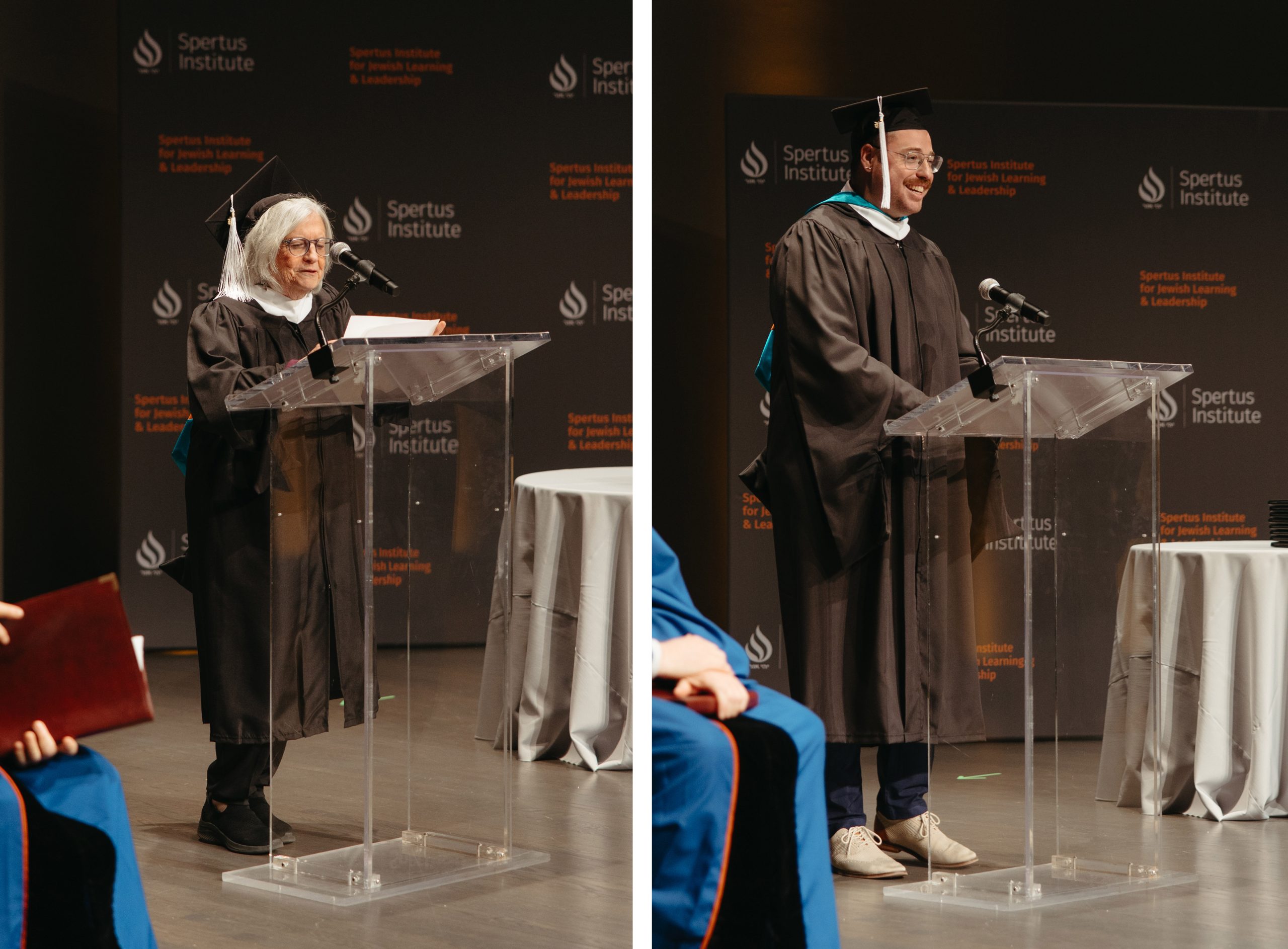
Two Spertus students shared remarks.
MAJS student Ellen Olshansky complimented Spertus on invigorating her for lifelong learning. “Age is never a barrier at Spertus. This is one reason that I feel more energized and why I continue to seek more learning opportunities,” Olshansky expressed. “Rather than age being a barrier to learning, it is a catalyst – a motivator – to explore new ideas and thoughts, but also to understand our own lives and identities more thoroughly.”
Spertus also provided opportunities for her to focus on her Jewish identity. “I have been able to search and explore parts of my Jewish roots and integrate what I call an ‘elusive thread’ of my identity,” Olshansky said. “The elusive thread to which I refer is not only the spiritual side of Judaism, but the ability to learn from Jewish texts, from professors, and from fellow students about how to embrace Jewish values very consciously into my life. This is especially important in the times we are now living in, with the rise of antisemitism and the threats to democracy.”
Next, MAJPS student Josh Schalk opened his remarks by recounting the traumatic timing of his cohort beginning their Spertus learning. “October 10th, 2023, was our first class. Just days after witnessing the horrific attacks of October 7th, our cohort of emotional strangers joined a Zoom room,” Schalk said. “We had no clue how the friendships and relationships we were about to form would drastically impact all aspects of our lives for the better.”
He also talked about the transformative effects of a Spertus degree. “When I really think about it, this degree is about having the ability to master anything that comes our way, knowing that what we have learned will guide us in the right direction,” he explained. “It’s about recognizing how the intangible Jewish values that guide us affect the decisions we make professionally and how the organizations we will run in the future live out those values. It’s about recognizing and embracing our own leadership potential while raising the potential of others around us. It’s about understanding the responsibility we have to ourselves and to the Jewish people through the work we do to better our community, empowered by sharing our ‘whys’.”
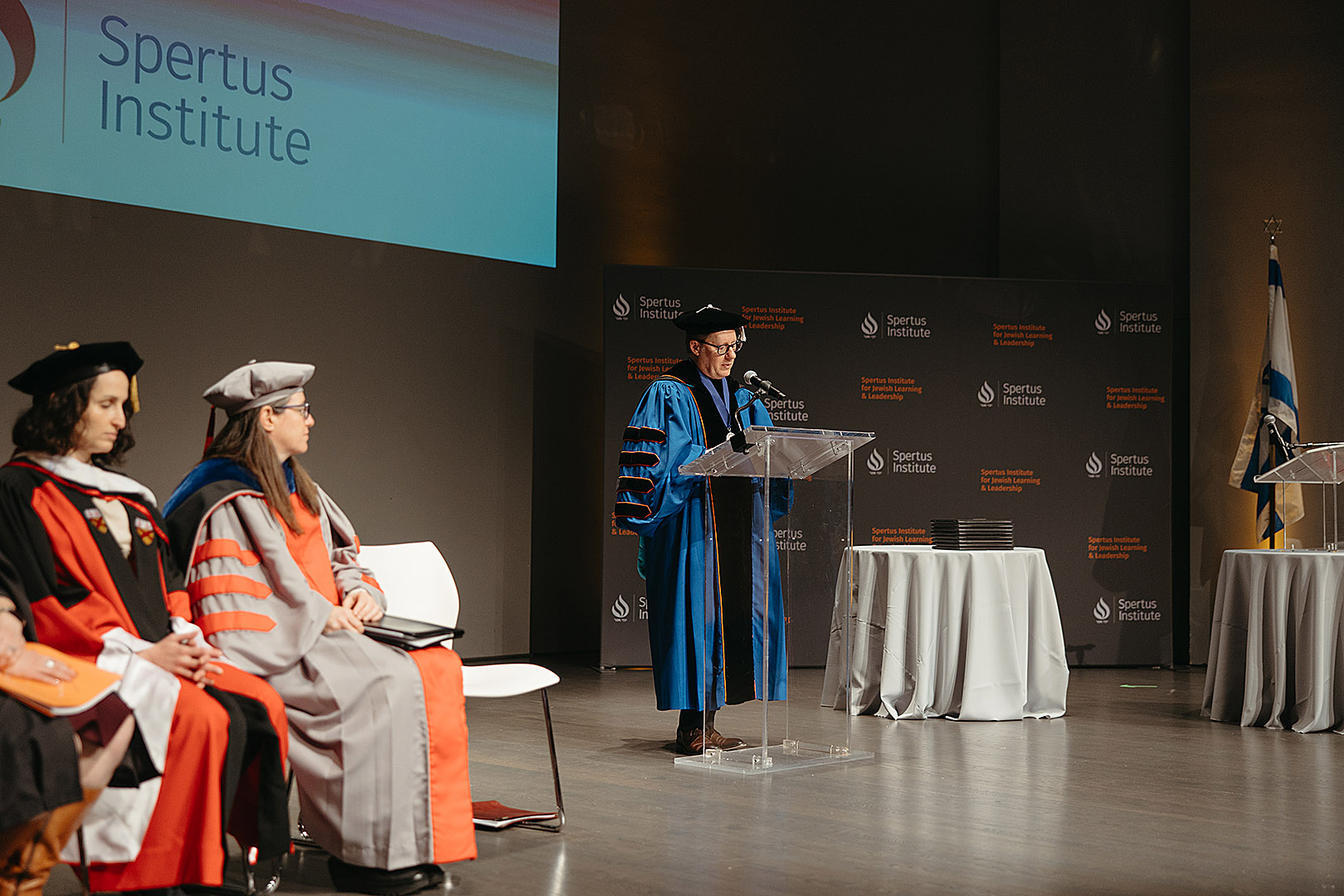
Spertus Institute President & CEO Dr. Dean P. Bell gave the graduation address.
Dr. Dean Bell’s keynote address focused on the need for these Spertus students to “be more adaptable and flexible, but also more innovative than ever.” He mentioned his book on interreligious resilience, coauthored with Professor Michael S. Hogue, concentrating on five leadership skills: 1) inspiring and motivating, 2) knowledge and learning, 3) self-awareness, 4) contextualizing and meaning making, and 5) adapting and growing from change. However, since the world is rapidly changing, he suggested to the graduating Spertus students ways to reimagine these leadership skills. For instance, “Instead of simply noting that we need to acquire knowledge or even that we need to continue to learn and acquire a range of skills, which is certainly valuable, it is helpful to think about and engage with the ongoing process of learning itself.”
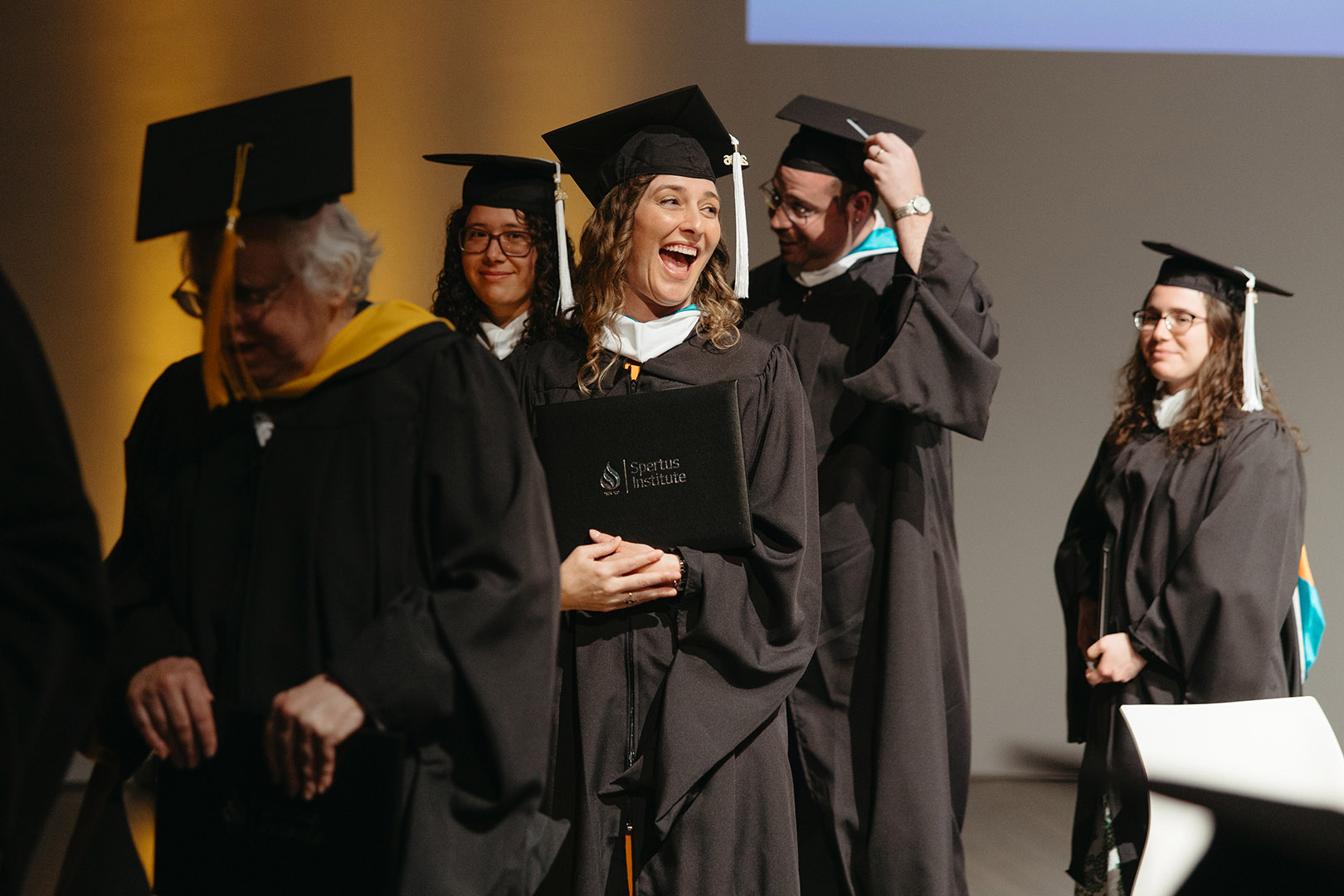
Photos by Maggie Russo.